
Dr MR Jain
DO
Ophthalmologist
About Me
Dr MR Jain
DO
Ophthalmologist
10 Years Experience
Biography
Dr. MR Jain is a highly skilled ophthalmologist with over 10 years of dedicated experience in eye care and vision health. Committed to providing compassionate and comprehensive care, he combines advanced medical knowledge with a warm, patient-centered approach, ensuring each individual feels comfortable and informed throughout their treatment journey.
Throughout his decade-long career, Dr. Jain has developed expertise in diagnosing and managing a wide range of eye conditions. His areas of specialization include cataract surgery, glaucoma management, diabetic retinopathy treatment, corneal diseases, and refractive errors. He is also proficient in performing laser procedures and other minimally invasive techniques to improve vision and reduce dependency on glasses or contact lenses.
Dr. Jain understands that eye health plays a critical role in overall quality of life. He takes the time to listen carefully to each patient’s concerns, thoroughly examines the eyes using state-of-the-art diagnostic tools, and explains the findings in clear, easy-to-understand terms. Whether you’re coming in for a routine eye check-up, needing treatment for an urgent eye problem, or considering surgery, Dr. Jain ensures you have all the information needed to make confident decisions about your care.
As a doctor, he believes in the importance of preventive eye care and encourages regular screenings to catch issues early, especially for those with risk factors such as diabetes, high blood pressure, or a family history of eye disease. He works closely with patients to develop personalized treatment plans that align with their lifestyle and health goals.
Patients appreciate Dr. Jain’s approachable nature and his ability to create a trusting environment where questions are welcomed and fears are addressed. His goal is not only to treat eye conditions but also to empower patients with knowledge to maintain healthy vision for life.
Dr. MR Jain is committed to staying updated with the latest advancements in ophthalmology through continuous education and professional development. His combination of experience, expertise, and genuine care makes him a reliable and compassionate choice for anyone seeking eye care services. If you are looking for a doctor who values your vision and overall well-being, Dr. Jain is here to help protect and improve your eyesight with the highest standard of care.
My Clinic
OPD Hours
| Monday | Morning | 10:00 AM | - | 02:00 PM |
| Evening | 06:00 PM | - | 09:00 PM | |
| Tuesday | Morning | 10:00 AM | - | 02:00 PM |
| Evening | 06:00 PM | - | 09:00 PM | |
| Wednesday | Morning | 10:00 AM | - | 02:00 PM |
| Evening | 06:00 PM | - | 09:00 PM | |
| Thursday | Morning | 10:00 AM | - | 02:00 PM |
| Evening | 06:00 PM | - | 09:00 PM | |
| Friday | Morning | 10:00 AM | - | 02:00 PM |
| Evening | 06:00 PM | - | 09:00 PM | |
| Saturday | Morning | 10:00 AM | - | 02:00 PM |
| Evening | 06:00 PM | - | 09:00 PM | |
| Sunday | Morning | 10:00 AM | - | 02:00 PM |
| Evening | 06:00 PM | - | 09:00 PM |
Treatments
Specialised care and treatments offered
KERATOCONUS
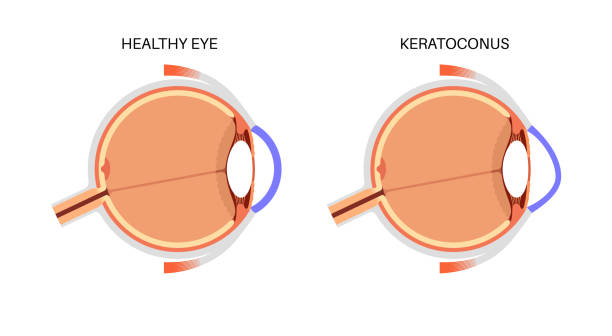
The early detection of keratoconus is important to arrest the progression of keratoconus and corneal irregularities. In early stages, keratoconus can be diagnosed after a detailed eye examination, which includes Retinoscopy, Slitlamp examination and tests like Topography, pentacam to check the curvature of cornea and Pachymetry to determine corneal thickness.
In advance stages keratoconus, is easily diagnosed on slit lamp and topography. In advanced stages, corrective prescription glasses do not help the patient to see clearly and they have to switch to using hard or semi soft contact lenses. A proper contact lens fit is crucial to obtain adequate vision and wearing comfort. Poorly fit or outdated contact lenses can be uncomfortable and lead to additional complications like corneal abrasions, scarring or infection.
CATARACT
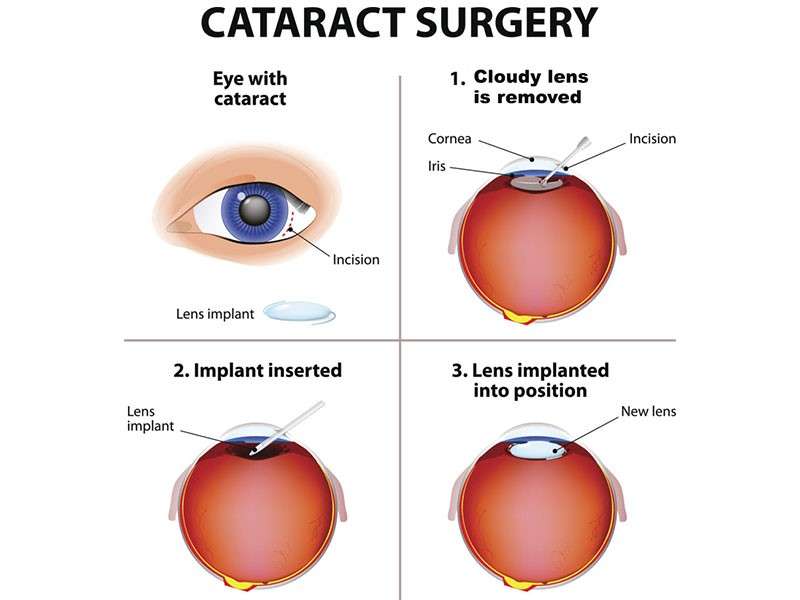
The lens of the eye is located immediately behind the iris and is responsible for 33% of the eyes focusing power. At birth it is like jelly, but unfortunately with age it gradually hardens and loses its ability to change shape.
Evidence of this hardening normally starts to affect us in our mid-forties when many require reading glasses for close work. This is called Presbyopia. The lens is made mostly of water and protein. Specific proteins within the lens are responsible for maintaining its clarity. Over many years, the structures of these lens proteins are altered, ultimately leading to a gradual clouding of the lens. Rarely, cataract can present at birth or in early childhood as a result of hereditary enzyme defects, and severe trauma to the eye, eye surgery, or intraocular inflammation can also cause cataract to occur earlier in life. With further increase in age, the lens continues to harden and starts to become more compact and cloudy, reducing initially quality of vision and later obstructing vision and interfering with day to day activities. A cloudy of opaque lens is called a cataract and unfortunately is inevitable.
CORNEA
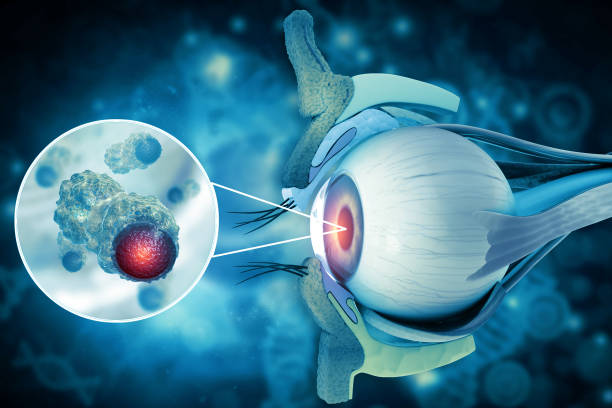
The cornea, the transparent front “window of the eye”, is responsible for about two thirds of the focusing power of the eye. The cornea’s refractive power is actually greater than that of the eye’s lens.
The cornea receives its nutrients through the tear film. A normal, healthy cornea should be transparent, thus devoid of blood vessels and opacities. Corneal tissue can become damaged through disease or trauma. This damage can cause scar tissue and opacities in the normally-clear cornea, resulting in a reduction in visual acuity.
If the cornea develops visually significant opacities or irregularities, a corneal transplant, or DSAEK procedure can be performed.
LASIK / REFRACTIVE SURGERIES
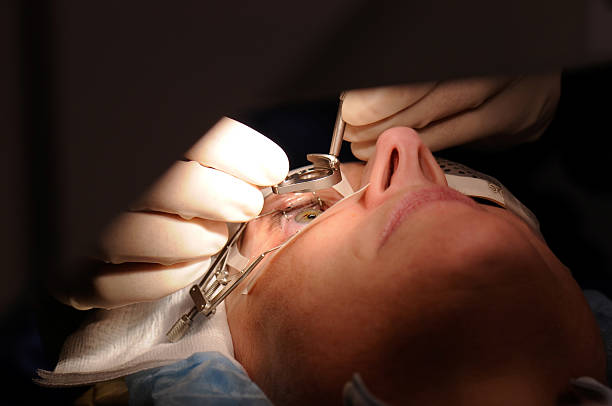
Hypermetropia is a defect of vision that causes the impossibility for rays of light to be focused on the retina, but behind it. The main cause for this defect is the insufficiente eye lenght.
A lot of people suffer from hypermetropia without even knowing it, because the eye automatically compensate this defect. The continuous effort to try to see clean images, can cause migraines that are rarely linked to eye’s problems. Hypermetropia gets noticed only when the eye cannot compensate any longer: vision becomes definitely blurred and people finally book an appointment to be checked out.
FAQs
What if my query is not listed here?
If you have any more queries that aren't listed, you can email us or call us.
Why is it best to consult a specialist?
A specialist doctor is trained to treat complex health conditions in their particular field. If you are diagnosed with a condition, it is best to consult a doctor who specializes in dealing with that particular condition.
Why should I consult Dr MR Jain?
Dr MR Jain is a specialist in Ophthalmologist and having more than 10 years of experience.
Why is it best to consult a specialist?
A specialist doctor is trained to treat complex health conditions in their particular field. If you are diagnosed with a condition, it is best to consult a doctor who specializes in dealing with that particular condition.
How can I book an appointment?
You can click on the book appointment link.
Do I need to bring anything at my first appointment?
You may bring the following documents, if available: ID Proof Prior medication list Any prior diagnosis documentation X-RAY reports